

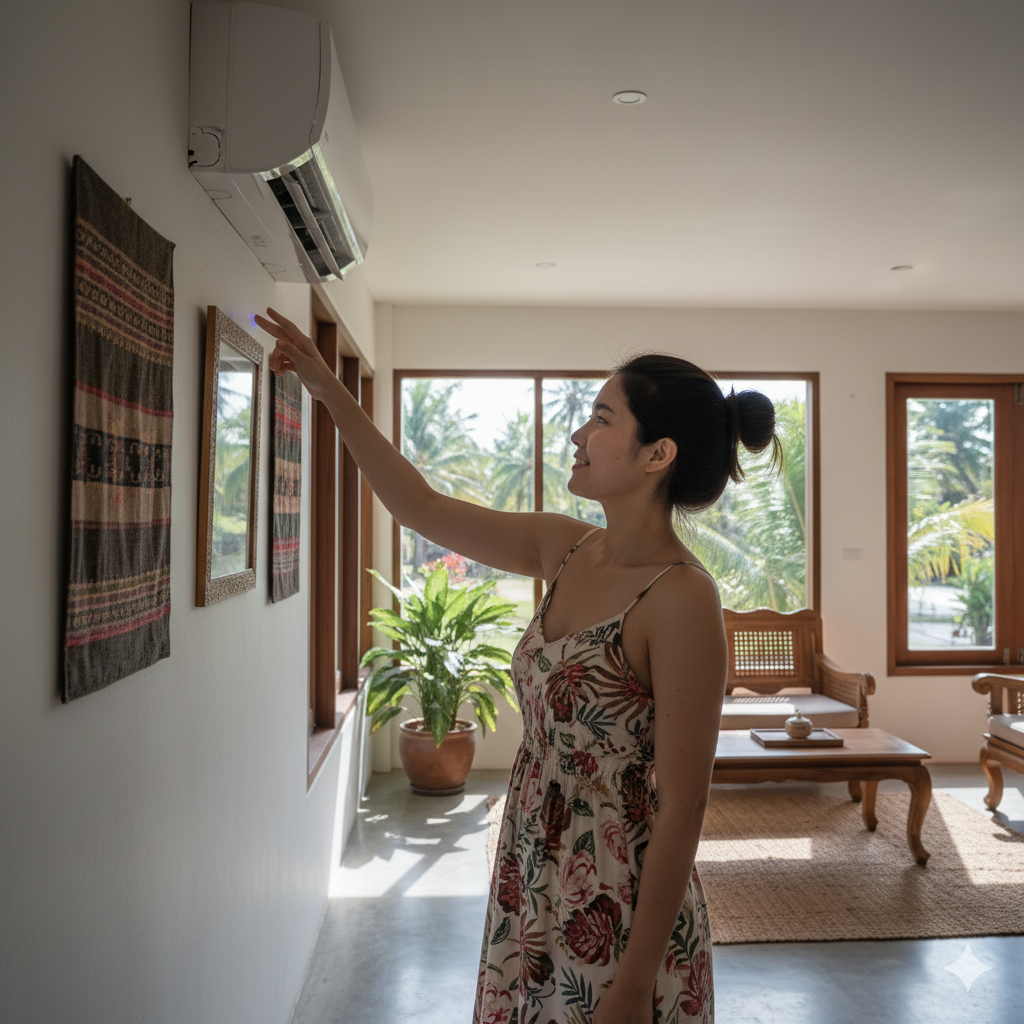




For a 12 square meter bedroom in Thailand, a 9,000 BTU air conditioner is the right size when the room is shaded and you use it mostly at night. If that same room sits on the top floor or takes the afternoon sun, move up to 12,000 BTU. Room size sets the number. Thai heat moves it.
The hottest room in a Thai house is rarely the one you would guess. In my grandmother’s place in Chiang Mai it was never the kitchen. It was the top bedroom, the one under the roof, where the heat of the whole afternoon collected and sat there until midnight. A neighbor put a 9,000 BTU unit in a room exactly that size and spent two years wondering why it never quite won. The number on the box was right for the floor. It was wrong for the roof above it.
That gap, between the room you measure and the room you actually live in, is what this guide is about. Below is the sizing table Thai HVAC sellers use, the simple math behind it, and then the correction that the math leaves out. After that, seven real units you can buy on Lazada right now, sorted by the room they belong in.
How many BTU a Thai room actually needs
Start with one number you can hold in your head. A normal Thai room needs roughly 700 to 800 BTU for every square meter of floor. Use the low end, around 700, for a bedroom you only cool at night and that stays out of direct sun. Use the high end, around 800, for a room you cool during the day, or one that bakes. Multiply your floor area by that figure and you have a starting BTU.
A 16 square meter living room at 800 BTU per square meter comes to 12,800, which rounds to a 12,000 to 13,000 BTU unit. A shaded 12 square meter bedroom at 700 lands near 8,400, which is a 9,000 BTU unit. The table below, drawn from Thai retailer sizing charts and the BTU guides that Mitsubishi Heavy and Daikin publish for Thailand, does that math for you. Read the two columns side by side, because the difference between them is the whole point.
| AC size | Cool, shaded room (sqm) | Hot room. Daytime, sun, or top floor (sqm) |
|---|---|---|
| 9,000 BTU | 12 to 15 | 10 to 13 |
| 12,000 BTU | 16 to 19 | 14 to 16 |
| 15,000 BTU | 20 to 23 | 17 to 19 |
| 18,000 BTU | 24 to 27 | 20 to 22 |
| 21,000 BTU | 28 to 31 | 23 to 25 |
| 24,000 BTU | 32 to 35 | 26 to 29 |
| 30,000 BTU | 40 to 43 | 33 to 35 |
The right-hand column is the one Thailand lives in. A top-floor room takes heat through the ceiling all afternoon, long after the sun has moved. A west-facing wall keeps radiating into the evening. A room with glass, or one you cook near, runs hotter than its floor suggests. When any of those apply, read your size from the hot-room column, which quietly drops every band down by two or three square meters. The same 16 square meter room is a comfortable 12,000 BTU when it’s shaded and a tight one when it faces the sun.
The 9,000 versus 12,000 BTU question, answered
This is the choice most people here actually face, because most bedrooms in Thailand land between 10 and 16 square meters. A 12 square meter room sits right at the top of the 9,000 BTU range for a cool room, and just past it for a hot one. So the honest answer depends on three things you already know about your own room.
Pick 9,000 BTU if the room is a bedroom you cool at night, it sits on a middle floor, and the sun doesn’t hit it in the afternoon. It will cool faster, cost less to run, and never feel underpowered. Pick 12,000 BTU if the room is on the top floor, faces west, has wide windows, or gets used through the heat of the day. On a Pantip thread about exactly this, even the technician hedged, telling the owner of a small sun-facing bedroom that 9,000 would work but 12,000 would too. When a pro hedges, the sun is the reason.
There’s a cost trap hiding in here that catches people. An air conditioner that’s slightly too small for a hot room never reaches the temperature you set, so it runs at full power all day and the bill climbs. A correctly larger inverter cools the room, then throttles down to a trickle to hold it. Thai consumer guides like Sanook Hitech make the same point. Undersizing to save money on the unit can cost you more every month on electricity. The goal is the right size, not the smallest one.
Why inverter and the เบอร์ 5 label decide your bill
Two units can carry the same BTU number and cost wildly different amounts to live with. The difference is the compressor. A fixed-speed unit runs flat out, switches off, then slams back on when the room warms, and that on-off cycle burns power. An inverter slows its compressor down and holds a steady temperature, which is why it sips electricity once the room is cool. For a bedroom you run eight hours a night, the inverter pays you back. For a spare room you cool twice a month, a cheaper fixed-speed unit is fine and you keep the upfront saving. If you also fight Bangkok’s dust and burning-season haze, pairing the AC with one of the units in our best air purifiers roundup does the job the air conditioner alone cannot.
The shortcut every Thai buyer trusts is the เบอร์ 5 energy label, and the newer five-star version of it. It’s the single sticker that tells you, at a glance, that the unit clears the efficiency bar. Pair it with the SEER number where the listing shows it. The Central Air unit further down, for instance, posts a SEER of 17.81 with a เบอร์ 5 label, which is the kind of figure that keeps the meter slow through a Bangkok April.
Seven units worth shortlisting, by room size
Every unit here is a real, currently listed model on Lazada Thailand with a เบอร์ 5 label and R32 refrigerant, which is the Thai-market standard now. I’ve grouped them by the room they suit, so you can jump to your size. Prices are the listed figures at the time of writing and move with promotions, so check the live number before you buy.
For a small or night-only bedroom, 9,000 to 13,000 BTU
The Mitsubishi Heavy Duty 9,000-class wall inverter at around ฿17,200 is the unit I’d put in that shaded 12 square meter bedroom from the top of this guide. Japanese build, quiet, and an inverter that holds a set temperature without drama. You pay a premium for the badge, but for a room you sleep in every night, the quiet and the longevity are worth it.
The Central Air IVJS13-1 R32 inverter, 13,000 BTU at around ฿10,999 is the value workhorse, and the one with verified buyer reviews on Lazada. A SEER of 17.81, a เบอร์ 5 label, a copper coil, and a price that undercuts the Japanese brands by thousands. For a 12 to 16 square meter room that needs daytime cooling without a big spend, this is the sensible pick.
Check the Central Air IVJS13-1 13,000 BTU price on Lazada
For the 12,000 BTU sweet spot, mid-size rooms with some sun
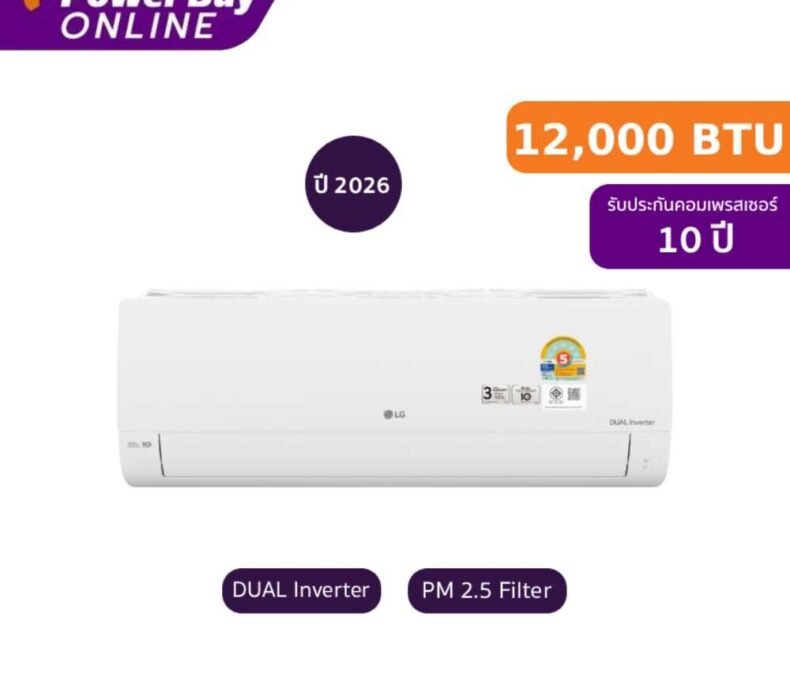
The LG 12,000 BTU DUALCOOL inverter at around ฿15,340 is the value choice in the size most Thai bedrooms need. LG’s inverter is well proven in this climate, and 12,000 BTU covers a shaded room up to 19 square meters or a sun-facing one up to 16. If your room is the one that made you size up from 9,000, start your shortlist here.
The Daikin 12,300 BTU wall inverter at around ฿20,510, often sold with installation included, is the premium version of the same idea. Daikin’s reputation for reliability in Thai heat is the reason people pay more, and the install-included listings take the hassle out of the day you fit it. Worth it if you plan to keep the unit a decade.
Check the LG 12,000 BTU DUALCOOL price on Lazada
A note worth saying out loud. The LG and the Daikin above are both sold by the same Lazada store. If you’re fitting out a condo and need two of these, buying the pair from one seller is the cleaner order, and it keeps your warranty and delivery under one roof rather than split across shops. The same logic shows up across our robot vacuum roundup when you outfit a whole home at once.
For a living room or a large, hot space, 18,000 BTU and up
The TCL BreezeIn Pro, 18,100 BTU inverter at around ฿21,290 covers a living room of 24 to 27 square meters, or a hot one down to 20. TCL prices its inverter close to its own fixed-speed units, which is why Chinese brands have taken over the value end of the Thai market. For an open-plan condo living area, this is the size that finally fills the room.
The TCL Fresh in 3.0, around 23,000 BTU at about ฿23,090 steps up again for a larger living and dining space, the kind where one unit has to cool a whole floor of a townhouse. Same value logic, more reach.
The Midea Tornado fixed-speed, 25,000 BTU at around ฿18,870 is the budget answer for a big room you don’t run all day. Fixed-speed keeps the price down, and for a living room used in the evenings rather than around the clock, the upfront saving makes sense over an inverter you wouldn’t fully use.
Check the Midea Tornado 25,000 BTU price on Lazada
We have not personally tested every unit in this guide. This sizing advice draws on Thai HVAC retailer charts, the BTU guides Mitsubishi Heavy and Daikin publish for Thailand, the Sanook consumer explainer, and owner reports from Pantip threads and Lazada buyer reviews. Every unit above is a real, currently listed model on Lazada Thailand.
The two sizing mistakes that cost you
The first is going too small to save money, which I’ve already warned about, because in a hot Thai room it backfires twice. The unit never catches up, so it runs at full power and the bill climbs, and you sit in a room that’s almost cool but never quite. The saving on the box becomes a tax on the meter.
The second mistake is the opposite, and it’s the one well-meaning advice pushes you toward. Buying far too big for the room sounds safe, but an oversized unit cools the air fast, hits its target, and switches off before it has pulled the humidity out. In a country where the damp is half the discomfort, that leaves a room that’s cold and clammy at the same time. On Pantip, owners who oversized small bedrooms describe exactly this, a unit that short-cycles and never dries the air. Right-sized beats oversized. The room should feel cool and dry, not cold and wet.
Frequently Asked Questions

Ploy covers smart home technology, kitchen appliances, and connected living for ElectroThailand. Based in Bangkok, she has spent four years testing everything from robot vacuums to smart locks in real Thai apartment conditions — small rooms, humid summers, and 220V Thai power grids. Her reviews focus on what actually simplifies daily life, not just what looks good on a spec sheet.